prdocucer stories
Jholman Rajo
Finca Alicia La Campa, Lempira (1,600m)
Twenty-three kilometers from the colonial city of Gracias, in a mountain community called Camapara, Jholman Mauricio Rajo tends one of Honduras's most quietly exceptional farms. This is Lenca territory — an indigenous culture that has called these mountains home for centuries, where coffee is still brewed in handmade clay vessels and the traditions of the land run deeper than any certification.
Jholman is a second-generation coffee farmer. What his family started, he has taken further — learning specialty processes, adapting to what modern markets demand, and doing it entirely on his own terms. In 2019, Finca Alicia took first place at the Festival Aroma y Cultura. It has since placed in the Top 10 at Coffee Fest Copán. The recognition didn't change how he farms. It confirmed what he already knew.
The farm sits between 1,590 and 1,620 meters, under near-constant cloud cover, surrounded by dense forest, abundant water sources, and species of birds that include the quetzal. Jholman farms Catuai Amarillo, Catuai Rojo, Lempira, Café 90, and Geisha. He also keeps stingless bees and Apis mellifera colonies — not as a side project, but as a deliberate act of conservation, strengthening the farm's pollination ecosystem and producing small-batch honey.
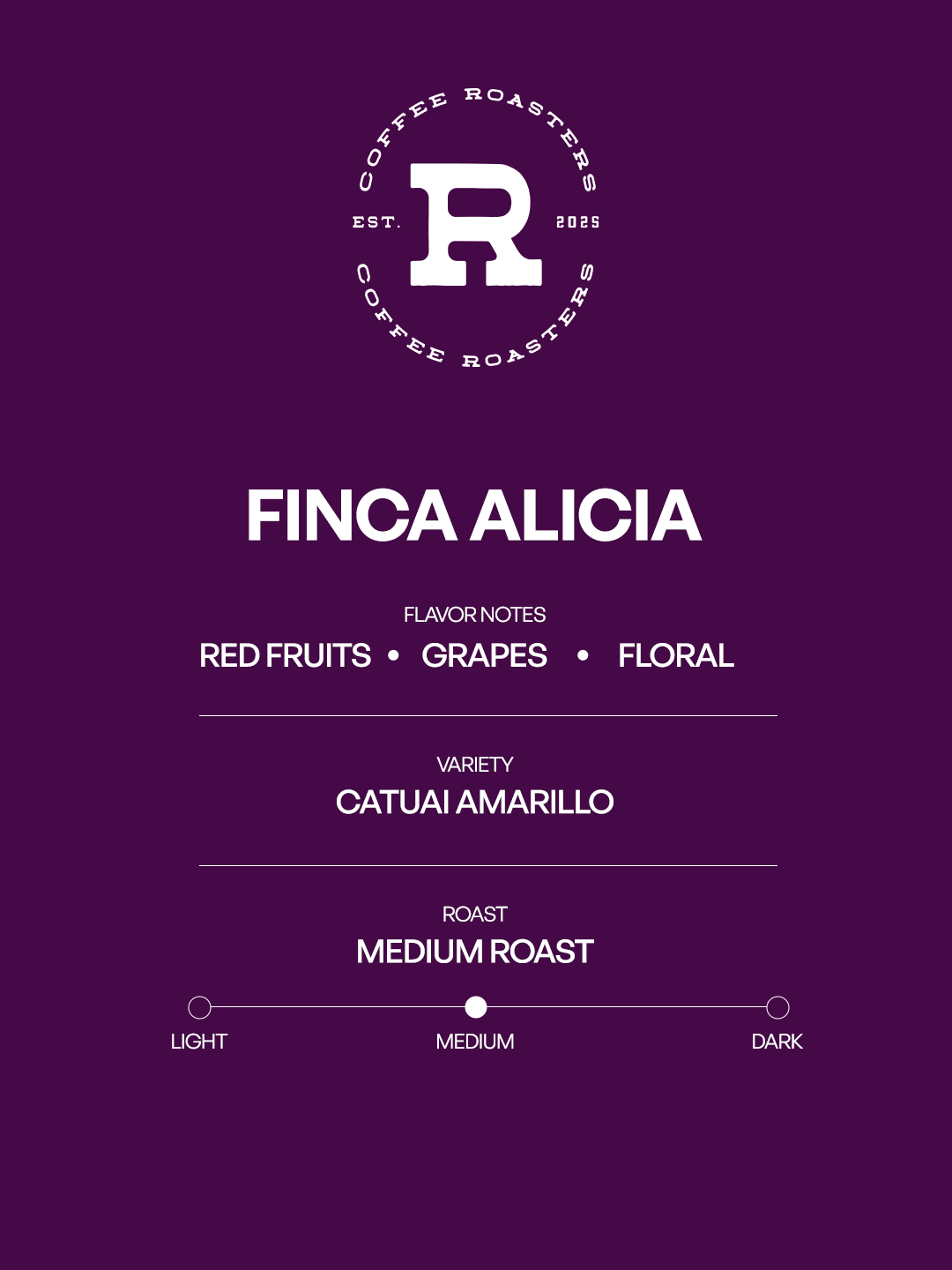
The coffee we carry is processed using natural anaerobic fermentation — ripe cherries selected by hand, fermented for 48 hours in sealed conditions, then dried slowly inside solar dryers for 32 days. The result is a cup that carries everything this land holds: red fruits, grape, and a floral finish that arrives the moment you open the bag.
Finca Alicia is USDA Organic certified. This is a microlot of approximately 50 lbs. When it's gone, it's gone.