Finca Don Toño's Zero-Waste Cycle: How Luis Herrera Turns Coffee Husks Into Compost
Most coffee farms produce more than coffee. They produce waste — pulp, husks, wastewater from processing — and what happens to that waste says a lot about how a farm is run.
At Finca Don Toño, in San Marcos de Caiquín, Opalaca, Honduras, Luis Herrera runs his farm on a different principle: nothing leaves the cycle unused.
Where Gracias Comes From
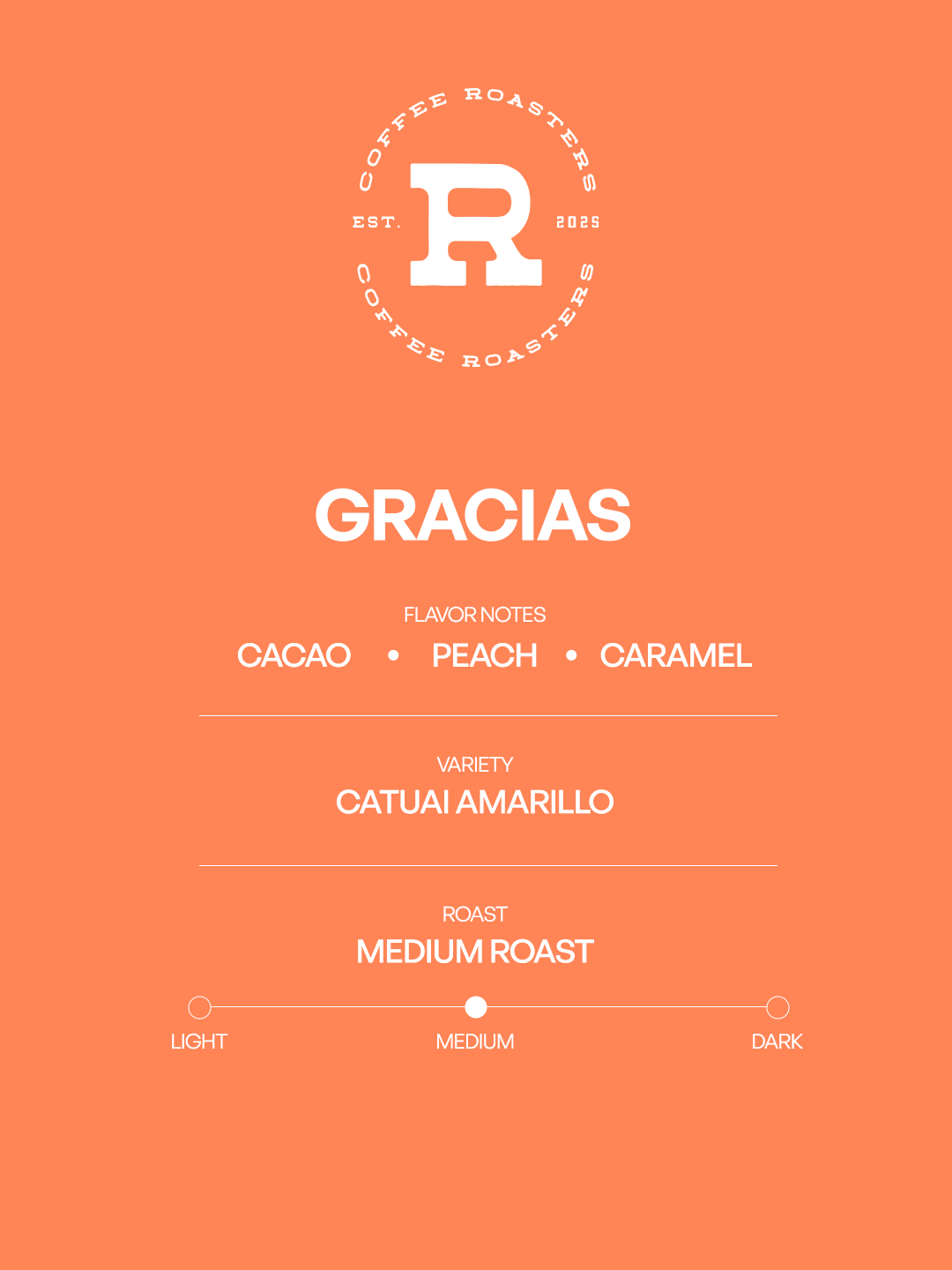
Finca Don Toño sits at 1,600 meters in the Opalaca mountains, where Luis grows Catuai Amarillo using washed processing — a method built on precision. The cherry skin is removed, the beans are fermented and rinsed, and every step is designed to let the coffee's natural character come through cleanly. It's part of why Gracias earns its name: a clean, quiet cup, without shortcuts.
But the process that makes the coffee doesn't end at the coffee.
Nothing Wasted, Everything Returned
At Finca Don Toño, the byproducts of processing don't just disappear:
- Coffee husks are composted and returned to the soil, feeding the same trees that produced them.
- Water used in processing is treated before it leaves the farm, protecting the streams that run through these mountains.
- Shade trees are kept deliberately in place — not just for the coffee, but for the ecosystem underneath them, where other plants and organisms depend on that cover to thrive.
None of this is required. It's a choice, repeated on purpose, harvest after harvest — because Luis sees the farm as a system, not just a crop.
Why It Matters Beyond the Farm
A lot of what happens on a coffee farm never makes it into the cup — but it shapes everything that does. A farm that protects its water and its soil isn't just being responsible. It's protecting the conditions that let it keep producing coffee this good, year after year.
When you drink Gracias, you're tasting the result of a process built on precision. But behind that process is a farm built on the idea that nothing should go to waste — not the fruit, not the water, not the land itself.