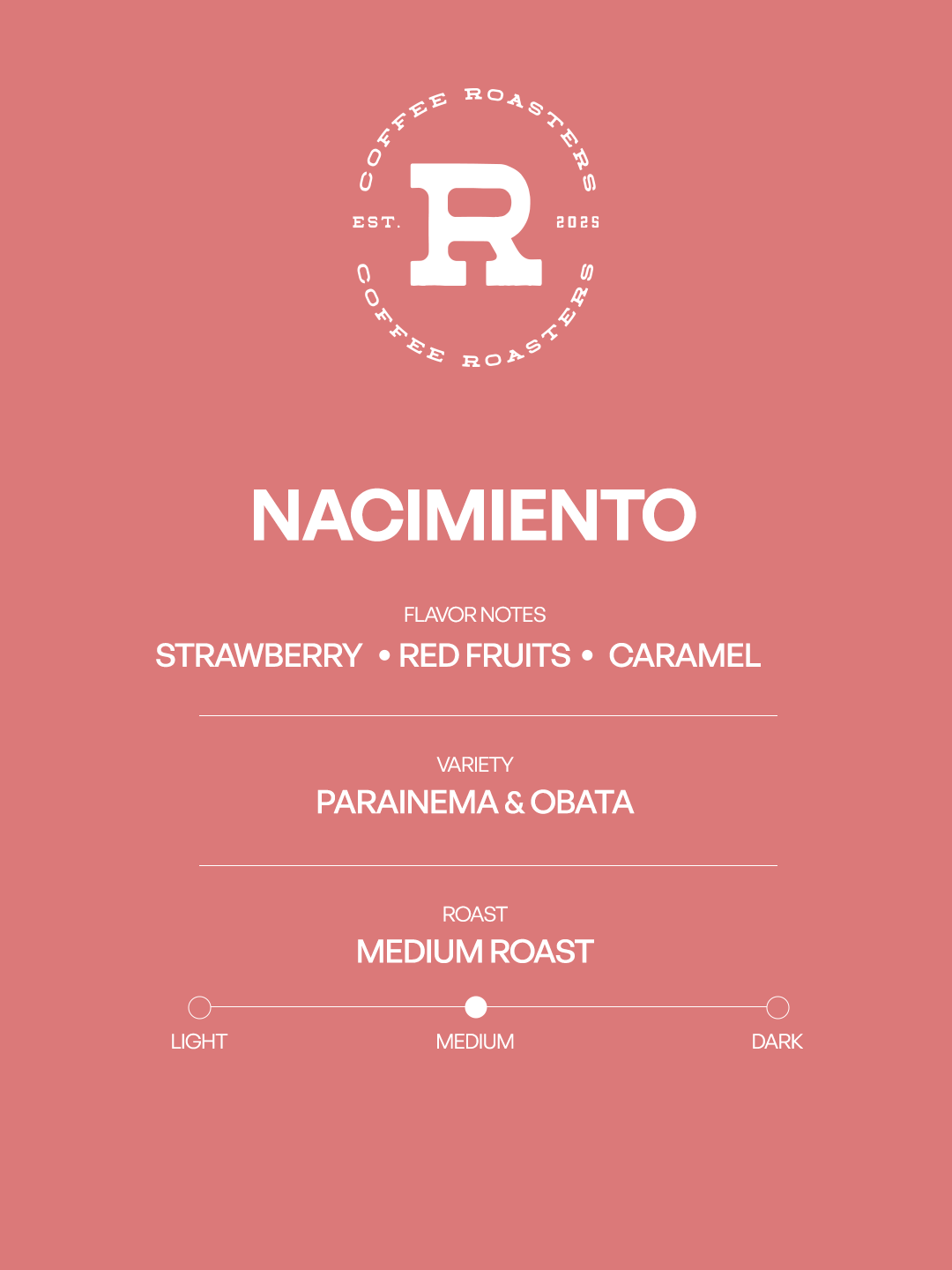
Some farms are built. Finca El Nacimiento feels like it was always there, waiting to be found.
Six years ago, Alba Marina Parada and Francisco Javier Bautista walked onto a piece of land in the mountains of Marcala and recognized something in it. They planted Obatá and Parainema by hand — varieties chosen not for ease, but for what they could become in the right soil at the right altitude. They built from zero, with the intention that what they created would outlast them.
The name wasn't chosen. It was earned.
The Land Named Itself
El Nacimiento — the birth, the spring — takes its name from the land itself. Two natural water springs rise from the soil: one near the top of the farm, one near the bottom. Around them, timber trees grow in the shade, sheltering animals that have made the farm their home too. In a place where water appears from the earth and forests grow upward on their own, the name could only ever be one thing.
Alba Marina and Francisco tend every corner of what they planted together — the same hands, the same dedication, the same love that broke the first ground six years ago.
The Second Generation
Standing alongside them is their daughter, Yojana Yanuari Bautista. She didn't inherit a finished farm — she inherited a living one, still growing, still becoming. Her role is processing: taking the cherries her parents grow and ensuring that every decision made after harvest honors what the land produced.
Processing at this altitude, with these varieties, is precise work. Natural processing — the method used for El Nacimiento — demands patience. The fruit stays on the bean through drying, slowly transferring its character: the strawberry, the red fruit, the quiet warmth of caramel that makes this coffee immediately recognizable.
In El Nacimiento, everything is born: the water, the trees, the coffee — and a family that keeps growing with the land.
Yojana is proof that the best farms don't peak with the first generation. They deepen.